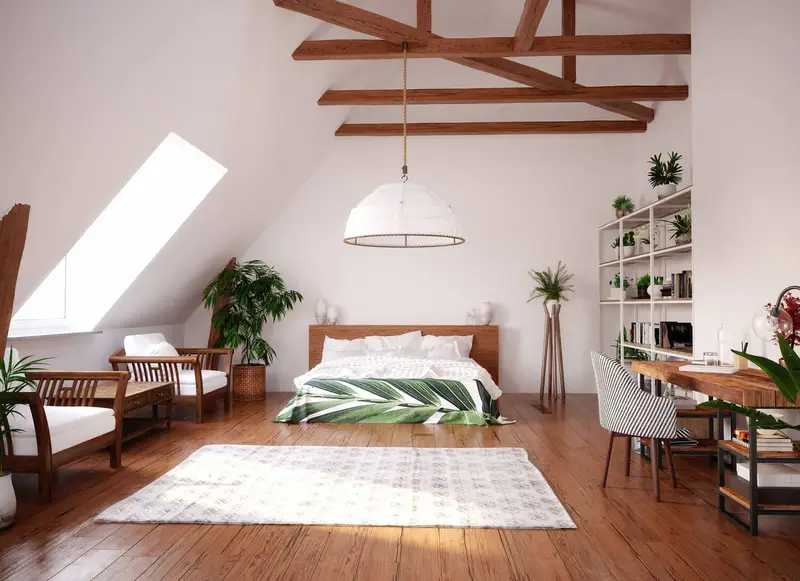
Tips on how to turn your loft into living space
Tips on how to turn your loft into living space
Converting a loft requires careful planning. Roof angles, structural limits and building regulations can all present challenges, but with the right preparation most issues can be resolved early in the process.
Below are practical tips to help you plan a successful loft conversion.
1. Clear and inspect the loft
If your loft has mainly been used for storage, start by clearing it completely and carrying out a thorough inspection. Look for:
- signs of rodents
- moisture or mould
- damage caused by water leaks
Check the condition of the chimney, roof timbers and ventilation openings to ensure they will not cause problems later.
2. Check if there is enough space
One of the most important questions is whether your loft meets the minimum space requirements set by building regulations. Usable head height is especially important for comfort and safety.
If headroom is limited, you may consider:
- modifying parts of the roof structure
- installing roof windows to bring in more light and create a greater sense of space
3. Identify the roof structure
The type of roof construction plays a major role in determining how easily a loft can be converted.
Traditional rafter roofs usually offer more open space. The rafters run from the ridge down to the walls, leaving room for a usable floor area.
Trussed roofs, common in newer homes, are made from prefabricated triangular frames. These often restrict space and can make conversions more complex, though not impossible.
4. Provide safe access
Many lofts are accessed via pull-down ladders or steep stairways. For a habitable room, permanent stairs are required and must comply with UK building regulations for safety and access.
5. Consult a designer or structural engineer
Any structural changes to the loft affect the entire house. While experienced builders can offer guidance, consulting a designer or structural engineer is strongly recommended.
A professional assessment ensures the structure can safely support the conversion and helps avoid costly mistakes.
6. Assess the floor strength
Most loft floors are designed for storage rather than daily use. To create a living space, it is often necessary to:
- strengthen existing joists
- install a new floor structure
These changes may raise the floor level, which can affect ceiling heights and stair design.
7. Set a realistic budget
Loft conversions can be expensive and often involve unforeseen costs. Depending on the scope of work and the intended use, costs can vary significantly.
A simple conversion for a home office is usually more affordable than creating a bedroom with an en-suite bathroom. Research current building costs and include a contingency in your budget.
8. Install proper insulation
Lofts are often poorly insulated because they were not originally designed for living. High-quality insulation is essential for year-round comfort and helps:
- reduce overheating in summer
- minimise heat loss in winter
Good insulation also improves the overall energy efficiency of the house.
9. Ensure ventilation and temperature control
A ventilation gap should be maintained between the insulation and the roof structure to allow airflow and prevent moisture build-up.
As the highest point of the house, lofts tend to get warmer than other rooms. You may need additional ventilation or cooling solutions, and it is important to check whether your existing heating system can support the extra space.
10. Use the space creatively
Sloping ceilings and unusual shapes require smart design solutions. Built-in storage, wardrobes under eaves and custom shelving help make the most of every available centimetre.
Plasterboard structures and bespoke joinery can improve both functionality and appearance.
11. Consider the roof covering
The type and colour of your roof covering can influence loft temperatures. Light-coloured materials reflect sunlight, while darker roofs absorb heat and increase cooling demands.
If a roof replacement is planned, choosing lighter materials can improve comfort and energy performance in the long term.
Related articles

Restoring Original Parquet Floors: Why Refurbishing Old Flooring Is Worth It
Old wooden floors carry a unique character that is difficult to replicate in modern new builds. Restoring original parquet blocks is not only an environmentally responsible decision, but also an investment in the timeless beauty of your interior. A professionally refurbished wooden floor can often outperform brand new materials in both appearance and longevity.

Step by step: How to prepare a subfloor for floating floor installation
Correct subfloor preparation is essential for the long-term performance and trouble-free use of a floating floor. Skipping or underestimating this stage often leads to deformation, squeaking and damage to the floor panels. In this article, you will learn how to prepare a subfloor for floating flooring step by step, using professional methods without unnecessary complications. Proper preparation directly affects the final appearance, stability and walking comfort of the entire floor.

How often should you paint a house or flat? A room-by-room guide
Regular interior painting is not only about appearance but also about protecting surfaces and maintaining a healthy living environment. The correct repainting frequency depends on the type of room, how intensively it is used and the materials chosen. Many people do not realise that neglected paintwork can even affect indoor air quality. This guide will help you understand how often each area of your home should be repainted and how proper planning extends the life of wall finishes.