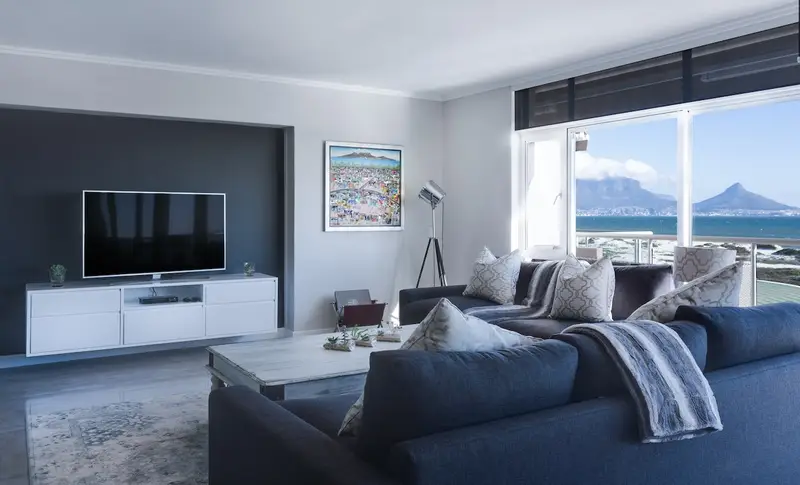
Living room renovation that pays off
Living room renovation that pays off
Make your living room feel larger
In many older houses, living rooms were designed to be relatively compact. Today’s buyers tend to favour open, bright and flexible spaces that feel generous and welcoming.
If there is an adjoining room that can be sacrificed, consider removing a non-load-bearing wall to expand the living area. This can dramatically improve the sense of space. Although the work involves demolition and some disruption, it is often technically simpler than many homeowners expect.
Before starting, it is essential to confirm that the wall is not load-bearing and that any required approvals are in place.
If removing a wall is not an option, you can still create a more open feel using partial walls, alcoves, glazed partitions, columns or carefully positioned furniture.
Replace or upgrade the front door
If you are looking for a project with excellent value for money, replacing or upgrading the front door is worth considering, especially if the living room is located at the front of the property.
A new or refurbished front door improves kerb appeal while also enhancing the look and feel of the living room from the inside. This type of upgrade often offers one of the highest returns on investment due to its relatively low cost and strong visual impact.
Before committing, it is sensible to review typical installation costs so your budget remains realistic.
Bring in more light with new windows
The living room is the heart of the home, and natural light plays a crucial role in how the space feels. Older windows often let in draughts, limit daylight and reduce energy efficiency.
Replacing windows can deliver a return on investment of around 70 to 75 percent. In addition to improving appearance, new windows help reduce heat loss and lower energy bills, which is increasingly important to UK buyers.
Choose a fresh colour scheme
Few rooms are influenced by colour as much as the living room. It is the space where families relax, entertain guests and spend a significant amount of time.
Painting the walls is one of the most popular DIY projects and offers an excellent return due to low material costs and a strong visual transformation.
Neutral colours such as white, soft grey and beige appeal to the widest range of buyers. If you want to add personality, earthy tones, deeper blues or subtle pastel shades can give the room character without overwhelming it.
Create the illusion of more space
Even if the living room cannot be physically enlarged, there are many ways to make it feel bigger through smart design choices.
Using plasterboard features or subtle ceiling details can add depth and structure, helping the room feel more open and modern.
Ceiling
Keep the ceiling light, ideally white. Dark colours can make the room feel lower and more enclosed.
Rug
Avoid rugs that are too small. Leave approximately 25 to 50 centimetres of visible floor between the rug and the walls.
Shelving
Position shelves higher up the wall to draw the eye upward and create the impression of greater ceiling height.
Storage
Place storage furniture against walls and reduce visible clutter. A tidy space always feels larger and more inviting.
Statement piece
A single standout item, such as a sofa, coffee table or light fitting, can anchor the room and give it a clear focal point.
Pay attention to lighting
Lighting has a major impact on how a living room feels. A combination of floor lamps and table lamps creates a warm, comfortable atmosphere, while a well-chosen ceiling light adds a polished, finished look.
Thoughtful lighting can highlight artwork, architectural details or feature walls and ensure the living room feels welcoming at any time of day.
Related articles
7 Things You Need to Know Before Renovating Your Flat or House
You know you want to renovate your flat or house, but you are not quite sure where to start. You are not alone. Many homeowners jump into a renovation project without fully understanding what lies ahead.

Restoring Original Parquet Floors: Why Refurbishing Old Flooring Is Worth It
Old wooden floors carry a unique character that is difficult to replicate in modern new builds. Restoring original parquet blocks is not only an environmentally responsible decision, but also an investment in the timeless beauty of your interior. A professionally refurbished wooden floor can often outperform brand new materials in both appearance and longevity.

Step by step: How to prepare a subfloor for floating floor installation
Correct subfloor preparation is essential for the long-term performance and trouble-free use of a floating floor. Skipping or underestimating this stage often leads to deformation, squeaking and damage to the floor panels. In this article, you will learn how to prepare a subfloor for floating flooring step by step, using professional methods without unnecessary complications. Proper preparation directly affects the final appearance, stability and walking comfort of the entire floor.