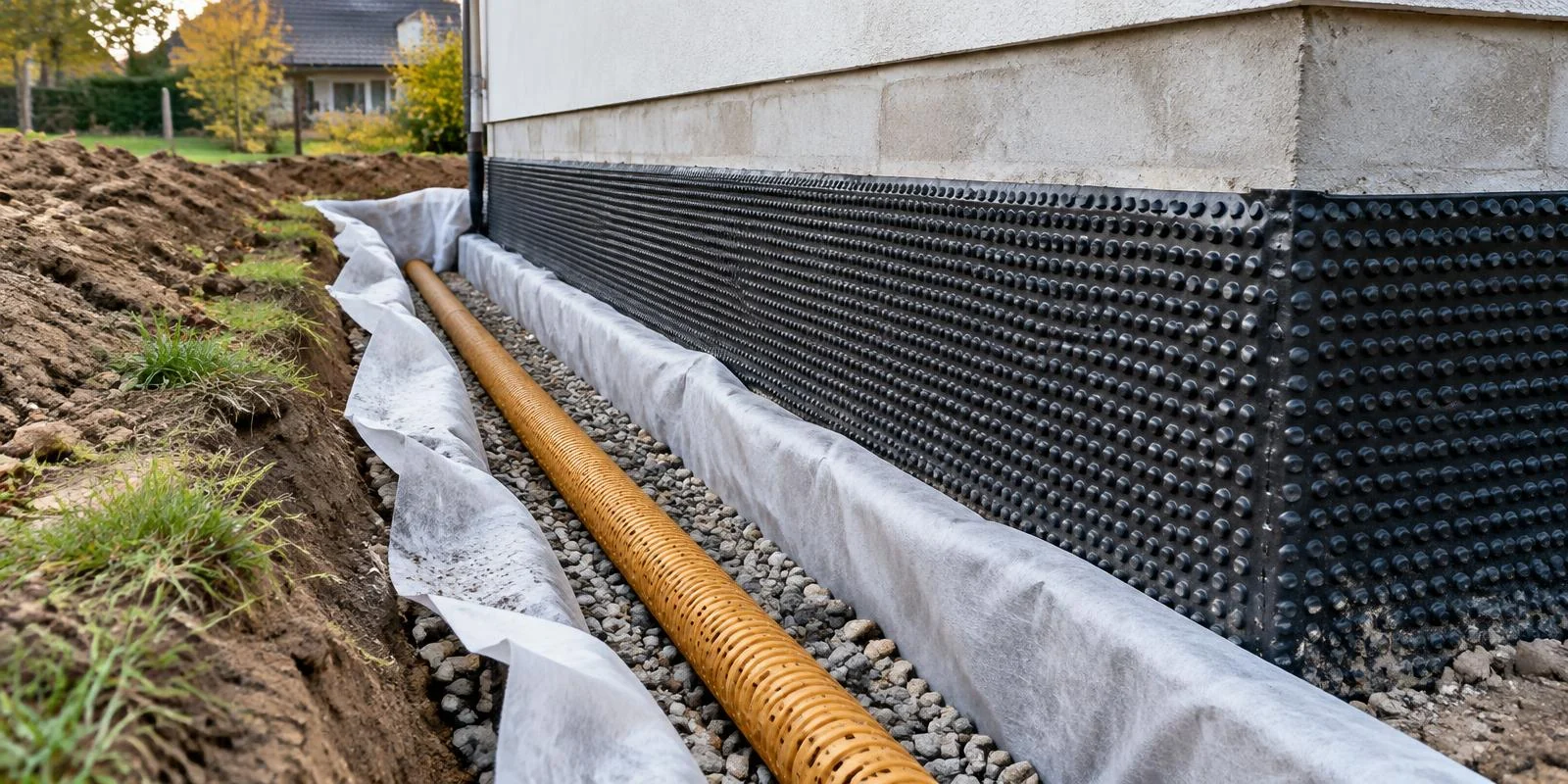
Drainage around the house can rescue a damp cellar, or it can be an expensive trench that leaves everything just as wet as before. This article helps you work out whether your house really needs it, how it works, which gravel, pipe and membrane to buy, where the water should go, and why you shouldn't send it down the drain in a dry summer.
Replacing old electrical wiring is often the most delayed part of a renovation, yet outdated electrics are the leading technical cause of domestic fires. In 2026, a full rewire starts from €952 for a studio flat up to €3,824 for a 5-bedroom property, with chasing channels costing between €5.70 and €8.50 per linear metre and plastering repairs at €7.30 to €10.90 per linear metre. In this article, you will learn when a rewire is essential, the step-by-step process, real-world costs, and common mistakes to avoid.
LED lighting is now the standard for every renovation and new build, compared to traditional bulbs, it saves 80 to 90% in energy and lasts for 25,000 to 50,000 hours. In 2026, LED strip installation costs between €7.70 and €11.50 per linear metre, recessed spotlights with hole cutting cost €18.30 to €27.50 per unit, pendant chandeliers €41.90 to €62.90, and wall lights €13.40 to €20.20. In this article, you will find real-world installation prices for all types of light fittings, how to plan your lighting during a renovation, and which mistakes to avoid.
Electrical installation is one of the most critical and technically demanding tasks in both renovations and new builds. A full electrical installation and fit-out for a 1-bedroom flat in 2026 costs on average €952 to €1,428, for a 3-bedroom flat €1,435 to €2,153, and for a 5-bedroom property €2,603 to €3,824. In this overview, you will find real market prices based on property size, what the fit-out includes, the differences between flats and houses, and how to hire a qualified electrician with the correct certifications.
Underfloor heating has become standard in many new homes and high-quality renovations across Europe. This guide explains when to choose a wet system and when an electric one, what drives the cost, how installation runs from design to heating up the screed, which floor finish to choose and what to check at handover.
Drywall (plasterboard on a metal frame) is one of the most widely used systems in renovations and new builds across Europe. This article explains what the price of drywall work is made of, how single and double-layer partitions differ, what to know about ceilings, how drywall compares with masonry and which installation mistakes to avoid. Current prices per m² are on the Plasterboard work page.
In 2026, construction labour rates range from €3/m² for basic painting and decorating to over €80/m² for complete bathroom refurbishments. Compared to 2024, average prices have risen by 8 to 15%, driven primarily by material costs and energy inflation. This guide provides current market rates for the ten most common trades, pricing trends since 2020, regional variations, professional tips to save 10 to 20%, and a real-world flat renovation case study.
External wall insulation is something most homeowners do once, so it pays to understand what the price is made of and how the systems differ. This guide, written for homeowners across Europe, covers what affects the budget, how to choose between EPS and mineral wool, which thickness suits your climate, how the work is carried out, which defects to avoid and what to check before you sign a contract. Current prices per m² are on the Building insulation page.
Proper wall preparation is essential before painting. Damaged, cracked or uneven surfaces can significantly affect both the final appearance and the durability of the paintwork. If imperfections are not repaired in time, the paint may not adhere properly, may start to crack or peel after a short period. Wall repairs are therefore a crucial step to ensure that your paint finish lasts for many years without issues. In this article, you will learn how to correctly repair damaged walls, which materials to use and what to watch out for during plastering work.
Priming walls and floors is a fundamental step in any high-quality renovation or construction project. Although it is often overlooked, proper priming can determine the durability and overall quality of the final surface finish. It helps prevent problems such as paint cracking, uneven plaster drying, or the separation of floor coverings.
Without the correct primer, even the highest-quality paint or flooring material can lose its properties and deteriorate quickly. In this article, we take a detailed look at why priming is essential, when it should be applied, and what its main benefits are.
Building external walls is one of the most important stages of house construction. Correct execution at this stage affects not only the structural stability and strength of the building, but also its energy efficiency and long-term durability. Mistakes made during masonry work can lead to heat loss, cracks, or even serious structural issues. That is why it is crucial to follow proper construction methods and use high-quality materials. In this article, we present 5 essential construction tips to help you achieve professional results when building external walls.
Internal partition walls define the layout of a space and have a significant impact on the functionality, comfort, and technical characteristics of an interior. Building them requires not only craftsmanship but, above all, the correct choice of materials. Each material has different properties, from sound insulation and load-bearing capacity to weight and cost.
When selecting materials for partition walls, it is important to consider the building type, the purpose of the room, and the investor’s budget. This article provides an overview of the most commonly used materials, their advantages and disadvantages, as well as current construction costs related to partition walls.